

Major League Baseball Players who lack confidence in their speaking skills that use interpreters with Professor Philip Anthony Lujan
Below is a B2+ level ESL podcast about baseball players who lack confidence in speaking English despite already migrating and achieving success in the United States of America. Good luck & enjoy!

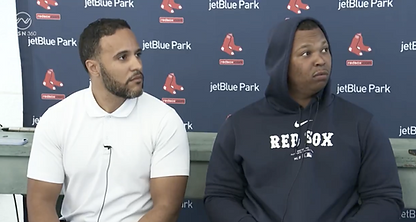


Left to Right: Los Angeles Dodgers SP Yoshinobu Yamamoto and his interpreter, Former Boston Red Sox 1B Rafael Devers and his interpreter, San Diego Padres SP Yu Darvish and his interpreter, Cinncinati Reds SS Elly De La Cruz & his interpreter, Cleveland Guardians 1B Jose Ramirez and his interpreter
Confidence is Key


Many MLB players use interpreters for media interviews due to lack of confidence or a desire for accuracy, not necessarily a lack of English skills
. Examples include Shohei Ohtani (Japanese), Rafael Devers (Spanish), and José Ramirez (Spanish), who are all fluent enough to speak English but prefer to use interpreters for formal interviews. Many other players use interpreters for interviews because they feel more comfortable and want to ensure their message is delivered perfectly.
-
Shohei Ohtani: Although he understands and can speak English, he uses an interpreter for interviews to feel more comfortable and to ensure his words are perfectly conveyed, especially since he is a massive celebrity in both the US and Japan.
-
Rafael Devers: He speaks English but prefers to use an interpreter for media availability because he doesn't feel confident enough to conduct interviews in English and finds it stressful.
-
José Ramirez: He speaks English with teammates but uses an interpreter for formal interviews to ensure his thoughts are communicated accurately and to allow his family, who speaks Spanish, to understand the interviews.
-
Yu Darvish: He used an interpreter because he wanted to ensure reporters understood his technical explanations, which can be difficult to articulate clearly in English, especially regarding baseball and injuries.
-
Elly De La Cruz: He started using an interpreter but has been practicing his English with teammates, as he finds it more pressure-filled to speak in front of thousands of people compared to speaking with his teammates in the clubhouse.
-
Urías: He mentioned that while he can speak English with his teammates, he still doesn't have the confidence to do interviews in English, even though he understands everything said to him
--- --- ---
-
-
-
According to Perplexity
Major League Baseball (MLB) actively employs interpreters for many of its players, especially those whose first language is not English, such as players from Japan, Korea, and Latin America. The use of interpreters is commonplace due to the league's increasing diversity and multilingual teams.
Notable MLB Players Using Interpreters
-
Shohei Ohtani (Los Angeles Dodgers): Ohtani had a dedicated Japanese interpreter, Ippei Mizuhara, who was widely known before Mizuhara's departure in 2024.
-
-
Ha-Seong Kim (San Diego Padres): Kim’s interpreter is Leo Bae, who came from South Korea with him and is known for his strong bond with Kim.
-
-
Masataka Yoshida (Boston Red Sox): Yoshida requested that his interpreter from Japan, Iichiro Wakabayashi, join him for his MLB career.
-
-
Yoshinobu Yamamoto (Los Angeles Dodgers): As another Japanese-speaking player, Yamamoto also works with an interpreter for media and in-game communications.
-
Spanish-Language Interpreters
Since 2016, MLB rules have required every team to provide at least one year-round Spanish interpreter to assist Latin American players—who comprise a large part of many rosters. These interpreters often work with stars like:
-
Carlos Correa
-
Jose Altuve
-
Yulieski Gurriel
-
Randy Arozarena
and other prolific Spanish-speaking players across various teams.
-
Interpreter Roles
Interpreters don’t just translate language; they often help players with:
-
Understanding and communicating strategies.
-
Interactions with media, teammates, and coaches.
-
Off-field needs like housing, medical visits, and daily life.
-
Summary Table
PlayerTeamInterpreterLanguage
Shohei OhtaniLos Angeles DodgersFormerly Ippei MizuharaJapanese
Ha-Seong KimSan Diego PadresLeo BaeKorean
Masataka YoshidaBoston Red SoxIichiro WakabayashiJapanese
Numerous playersVarious (e.g. Astros, Rays, etc.)Team-appointed interpretersSpanish
Yoshinobu YamamotoLos Angeles DodgersTeam-appointedJapanese
Interpreters are now a standard part of the MLB landscape for both Asian and Latin American players, ensuring communication and inclusiveness across the league
--- --- ---
MLB players who use interpreters face a mix of language, cultural, and social challenges that make interpreters an essential resource for many athletes.
Key Challenges Faced by Players
-
Language Barriers: Many foreign-born players arrive in the U.S. with limited English proficiency. This makes it difficult to communicate with teammates, coaches, and media, especially during high-pressure game situations or detailed strategy discussions. Even if players have conversational English, complex or technical discussions often require precise translation.
-
-
Cultural Adjustment: Adjusting to a new country involves more than just learning the language; it also means adapting to American culture, understanding local customs, and managing daily life activities like shopping or securing housing.
-
-
Media and Public Communication: Players often choose interpreters for interviews so that their words are not misquoted or misinterpreted. Some have experienced negative reactions or ridicule for their accents or grammatical mistakes when speaking English, discouraging them from public speaking without help. There is also a concern that emotional or nuanced answers could be misunderstood or taken out of context, so interpreters can help smooth communication.
Reasons for Choosing Interpreters
-
Accuracy and Confidence: Players prefer delivering accurate messages, especially during interviews or big games, where stakes and scrutiny are high. This ensures nothing is lost in translation or misunderstood.
-
-
Comfort and Support: Interpreters often become trusted companions, offering emotional and logistical support as well as translation. They help with off-field matters like housing, transportation, and even arranging family visits.
-
-
Integration and Team Communication: Even players who speak some English may use interpreters to facilitate better relationships in the clubhouse and ensure instructions or strategies are understood perfectly.
-
-
Protection from Misrepresentation: Players worry about saying something that could be misconstrued in another language, especially with media attention. Interpreters help ensure their intended message reaches the audience as they mean it.
Overall, interpreters help players navigate the demands of professional baseball in a new language and culture, making the transition smoother and allowing athletes to focus on their performance
--- --- ---
External Links:
https://www.mlb.com/news/elly-de-la-cruz-on-learning-to-speak-english
https://www.reddit.com/r/mets/comments/1l2mrmn/anybody_know_why_alvarez_stopped_doing_interviews/
https://www.youtube.com/watch?v=AfovJxofvrE
https://www.nytimes.com/athletic/4581805/2023/06/06/mlb-interpreters-shohei-ohtani/
https://nypost.com/2017/10/15/why-are-longtime-athletes-still-using-interpreters/
https://www.atanet.org/resources/blog-shohei-ohtanis-japanese-interpreter-under-the-microscope/
https://spectrumnews1.com/oh/columbus/news/2023/07/21/reds-translator-voice-for-big-stars
https://www.espn.com/mlb/story?id=15023038&src=desktop
Section Title
Small Title
This is a Paragraph. Click on "Edit Text" or double click on the text box to start editing the content and make sure to add any relevant details or information that you want to share with your visitors.
Small Title
This is a Paragraph. Click on "Edit Text" or double click on the text box to start editing the content and make sure to add any relevant details or information that you want to share with your visitors.
Small Title
This is a Paragraph. Click on "Edit Text" or double click on the text box to start editing the content and make sure to add any relevant details or information that you want to share with your visitors.
Small Title
This is a Paragraph. Click on "Edit Text" or double click on the text box to start editing the content and make sure to add any relevant details or information that you want to share with your visitors.
Section Title
This is a Paragraph. Click on "Edit Text" or double click on the text box to start editing the content and make sure to add any relevant details or information that you want to share with your visitors.